When the music stops and the crowds leave a Pride parade, street cleaners often face a less colorful scene: discarded cups, food packaging, broken decorations and promotional items scattered along the route. Much of this material was manufactured, transported and purchased for an event lasting only a few hours. The contradiction is difficult to ignore. Festivals that celebrate a more inclusive future can also generate waste that remains long after the celebrations end.
Some Pride organizers are already changing how their events operate. Instead of asking visitors to abandon the joy and color of the occasion, they are reconsidering what needs to be produced, how materials are used and what happens to them afterward.
The Hidden Waste Behind a Colorful Parade
A large Pride festival creates several different streams of waste. Visitors buy drinks and food, vendors distribute packaging, sponsors hand out branded accessories, and organizers install banners, temporary signs and decorations. Many products combine different materials, making them difficult to recycle. A miniature rainbow flag attached to a plastic stick may look harmless, but thousands of identical souvenirs can become a substantial collection and disposal problem.
Not all Pride merchandise is equally wasteful. A well-made rainbow flag carried to the same parade every summer may last for years, while a cheaply produced accessory might be discarded before the event ends. The distinction matters because replacing every plastic product with another material does not automatically reduce environmental damage. The more useful question is whether an item needs to be manufactured at all, and whether it will remain useful after the festival.
Why Some Festivals Have Stopped Handing Out Freebies
Promotional giveaways are an overlooked source of event waste. A company may distribute thousands of badges, wristbands, whistles or miniature flags to increase brand visibility. Visitors rarely arrive intending to collect these objects, yet they often accept them simply because they are free. Within hours, many become unwanted possessions that must either be carried home or thrown away.
Copenhagen Pride has taken a direct approach by banning promotional handouts and giveaways during its parade and at Pride Square. The organization also discourages confetti and has introduced reusable cups at its bars. These decisions reduce waste before it appears rather than relying exclusively on cleanup teams. For sponsors, the change presents a practical challenge: supporting a festival without covering the streets in disposable advertising. Funding accessibility services, providing drinking water or supporting community activities can offer a more lasting contribution than another bag of plastic souvenirs.
Reusable Cups Work Only When People Return Them
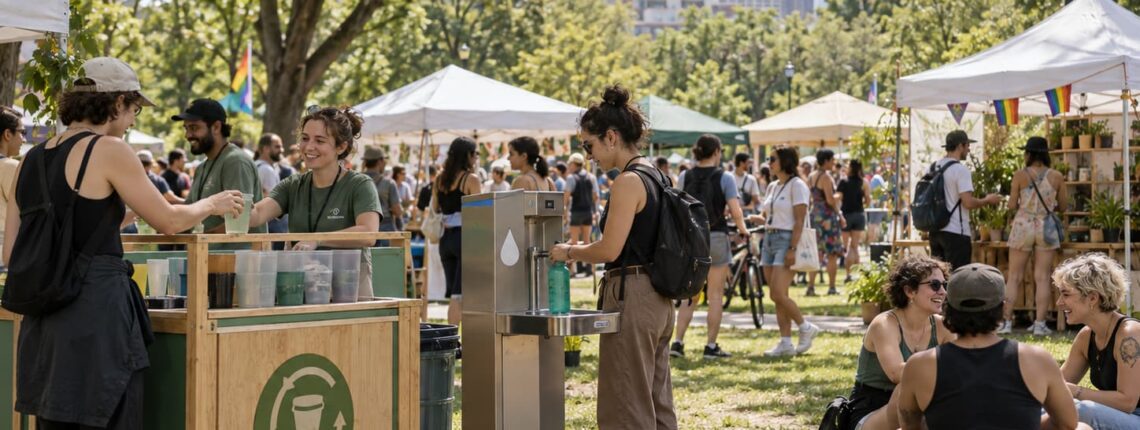
Drinks are an important part of outdoor festivals, particularly during warm summer weather. Disposable cups can quickly accumulate around stages, bars and food stalls. Reusable alternatives offer a solution, but their environmental benefit depends on the entire system. Cups need to be collected, washed and used repeatedly. If visitors take them home as souvenirs or discard them, the intended reduction in waste becomes less certain.
Prague Pride encourages visitors to bring returnable cups from previous festivals and provides separated waste collection. Pride Amsterdam also uses deposit cups and has prohibited confetti since 2018. A deposit gives visitors a reason to return their cups, while clearly marked collection points make the process easier. Organizers must consider washing facilities, staffing and the location of return stations. A reusable cup scheme should also be affordable and simple enough that it does not create unnecessary barriers for visitors.
The Most Sustainable Costume May Already Be in the Wardrobe
Pride fashion is expressive, inventive and often deliberately extravagant. Sequins, feathers, elaborate headpieces and handmade costumes help create the distinctive atmosphere of a parade. But buying a completely new outfit every year can generate unnecessary textile waste, especially when garments contain synthetic decorations that are difficult to repair or recycle. A costume worn once before being forgotten in a cupboard represents both wasted materials and wasted money.
Prague Pride explicitly encourages visitors to reuse previous costumes, avoid confetti cannons and consider alternatives to plastic glitter and sequins. There is considerable creative potential in repairing old outfits, exchanging accessories with friends or transforming existing clothing. Community costume swaps and repair workshops could make sustainable participation more accessible to people on limited budgets. The goal is not to make Pride visually restrained. It is to demonstrate that creativity does not require an endless supply of newly purchased products.
What Happens to Banners After the Festival?
Large outdoor celebrations require more than personal accessories. Temporary fencing, printed banners, stage backdrops and directional signs help organizers manage crowds and communicate with visitors. These materials are often produced for a particular year, with dates, sponsor logos or event-specific graphics that make reuse difficult. A banner can be physically intact but considered obsolete because the information printed on it is no longer relevant.
Copenhagen Pride has explored ways to extend the life of these materials. In 2026, the organization highlighted projects that transformed discarded Pride banners into bags and bucket hats. The initiative included local social enterprises and collaborators working with materials collected from previous celebrations. Such projects are more than decorative recycling: they demonstrate how event planning can account for an item’s next use. Organizers can also reduce future waste by separating permanent signs from replaceable date panels and choosing decorations that can be stored for another year.
A Cleaner Festival Requires More Than Recycling Bins
Waste is only one part of a Pride festival’s environmental footprint. Transport, electricity, generators, food supply and equipment deliveries also have consequences. Copenhagen Pride has reported efforts to reduce fossil-fuel use in event operations and provide free drinking water along its parade route, limiting dependence on bottled water. Its sustainability work has also included examining emissions from production and events rather than concentrating solely on visible rubbish.
Measuring progress makes these efforts more credible. Organizers can record the volume of waste collected, the proportion separated for recycling, the number of reusable cups returned and the quantity of decorations stored for another event. They can also examine whether public transport information and accessible routes help visitors arrive without private cars. None of these measures makes a major festival impact-free, and environmental choices still need to respect accessibility, safety and affordability.
The strongest approach is to make sustainability part of planning rather than an additional message printed on promotional material. A parade can remain loud, colorful and welcoming while generating fewer unnecessary products. When organizers reduce disposable merchandise, reuse equipment and design workable collection systems, the result is not a less joyful Pride. It is a celebration whose positive impact has a better chance of lasting longer than the cleanup.